
Cybersecurity services Melbourne businesses depend on protect against ransomware, phishing, and data breaches through layered defences. The Australian Cyber Security Centre received over 76,000 cybercrime reports in 2021–2022, with reports rising 23 per cent to nearly 94,000 in 2022–2023. Small businesses are frequently targeted because attackers know they often lack dedicated cybersecurity resources.
Effective cybersecurity for Melbourne businesses stops attacks before they succeed. It combines layered technology, staff training, and around-the-clock monitoring. Many businesses that use professional computer repairs Melbourne services for ongoing IT support can further strengthen their security by integrating proactive cybersecurity into the same managed IT strategy.
Key Insights: Why Cybersecurity Matters
- Layered defences including managed endpoint protection, email filtering, and multi-factor authentication stop attacks at multiple points, with MFA alone blocking 99.9 percent of automated credential attacks.
- Proactive monitoring around the clock catches threats before they become breaches, with incident response teams ready to contain attacks within minutes when something does get through.
- Staff security awareness training every six months addresses the human element that remains the entry point for most successful cyber attacks, turning your team from a weak point into a first line of defence.
What Can You Expect From Cybersecurity Services Melbourne Businesses Trust?
A cybersecurity provider deploys enterprise-grade security solutions on every device in your IT environment. They monitor systems around the clock for security events and filter malicious content from emails and web traffic. They run vulnerability assessments and penetration testing to identify vulnerabilities before attackers do.
Staff are trained to spot and report threats. When cyber attacks get through, incident response teams contain the breach fast. Managed security services give ongoing support rather than a one-off install. Plans scale from sole traders to medium businesses. Cybersecurity companies with local expertise provide faster response when cyber incidents happen.
What Cyber Threats Do Melbourne Businesses Face?
Investing in cybersecurity services Melbourne organisations trust helps reduce these risks through continuous monitoring and layered security controls.
Ransomware, business email compromise, phishing, and credential theft are the most prevalent cyber threats hitting Australian businesses. The ACSC reports ransomware as one of the most destructive and fastest-growing categories. Attackers scan for vulnerable systems nonstop.
Many providers align with the ACSC Essential Eight framework, requiring Maturity Level Two for proper essential eight compliance. Melbourne has over 150 cybersecurity organisations serving various business sizes. Cybersecurity firms in Melbourne cater to industries such as healthcare, finance, and education.
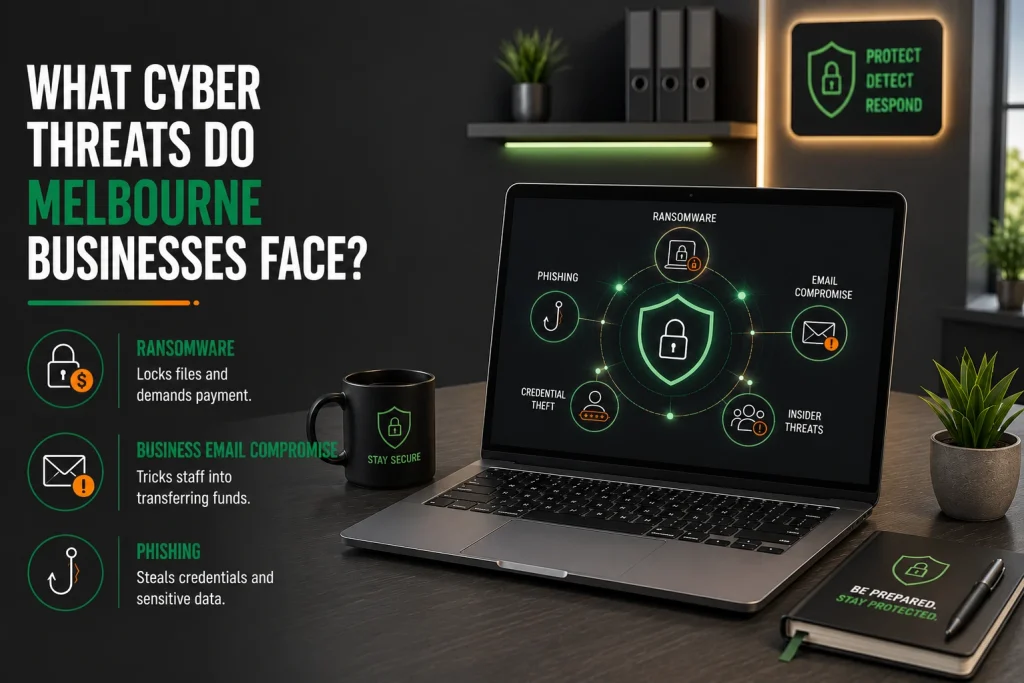
- Ransomware locks files across entire networks and demands payment
- Business email compromise tricks staff into transferring funds to criminals
- Phishing emails steal credentials that open access to critical data and sensitive data
- Credential stuffing uses passwords leaked from other breaches to break in
- Insider threats from careless or unhappy staff create internal risk
Why Are Small Businesses Prime Targets?
Small businesses often think they are too small to be noticed. The opposite is true. Cyber criminals target small businesses because they lack dedicated cybersecurity experts, often skip backups, and are more likely to pay ransoms. COSBOA names cybersecurity as a top risk for the sector.
Many businesses that suffer major cyber incidents never recover. Proactive protection with ongoing support is no longer optional. Melbourne businesses need a strong security strategy and a proactive approach to stay ahead of evolving cyber threats and sophisticated threats.
Many small organisations now choose cybersecurity services Melbourne providers because they receive enterprise-level protection without hiring an in-house security team.
How Much Does a Cyber Attack Cost?
The ACSC estimates the average cost exceeds $40,000 counting downtime, data loss, system fixes, and reputational harm. Those are direct costs only. Lost customer trust, regulatory penalties for data breaches under the Privacy Act, and management time on incident response add significantly more.
For a business on thin margins, one serious cyber incident can be the end. Implementing controls through a security framework like the Essential Eight dramatically lowers this risk.
What Cybersecurity Services Melbourne Businesses Should Have
Managed endpoint protection, email security, firewall and network security, multi-factor authentication with access management, regular security audits, and staff training form the essential layers for a strong security posture. No single product stops every threat.
A trusted cybersecurity services Melbourne provider can combine these security layers into a single managed solution tailored to your business.
Security Information and Event Management tools offer deep visibility into threats. Cloud security services protect environments like Microsoft 365. The OAIC provides guidance on notifiable data breaches that every business handling sensitive data must understand.
| Security Layer | What It Stops | How It Works |
| Endpoint Protection | Malware, ransomware | Managed software on every device, including BitDefender GravityZone protection |
| Email Security | Phishing, spam | Gateway filtering before inbox |
| Firewall and Network | Unauthorised access | Hardware and software with threat detection |
| Multi-Factor Authentication | Stolen passwords | App-based or hardware keys |
| Security Audits | Configuration gaps | Quarterly reviews and penetration testing |
| Staff Training | Social engineering | Regular sessions plus simulations |
Why Does Multi-Factor Authentication Stop So Many Attacks?
Microsoft reports MFA blocks about 99.9 percent of automated credential attacks. When someone steals a password, the second factor stops the login cold. The attacker has the key but cannot get past the deadbolt. Enabling MFA on email, financial systems, cloud storage, and remote access is the single highest-impact security action any business can take. Access management through MFA should be mandatory.
What Training Do Staff Need?
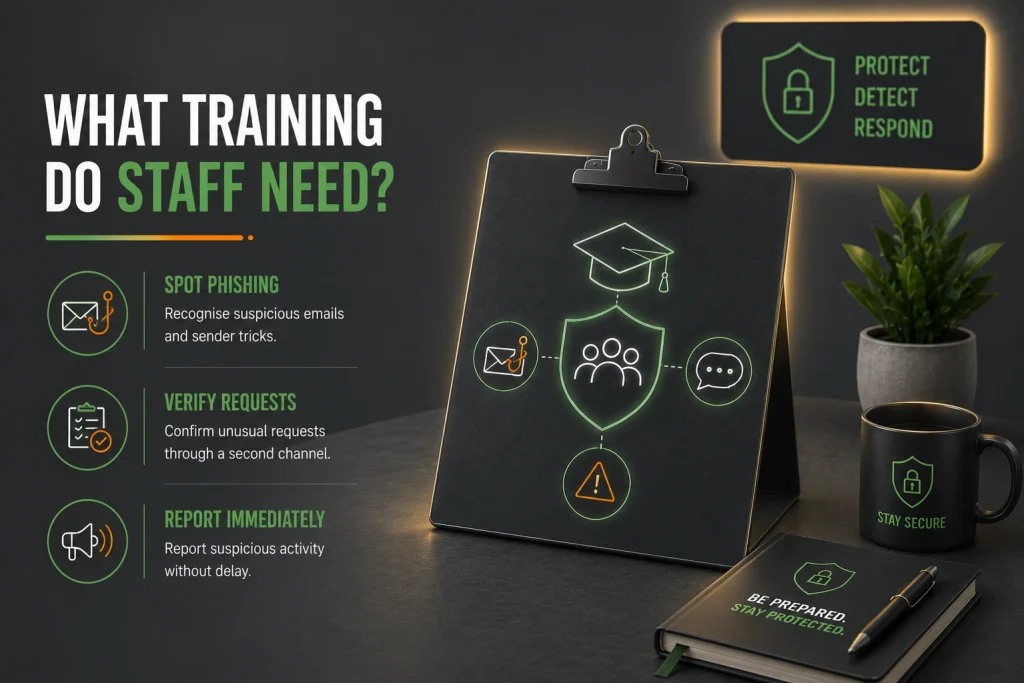
Staff need to spot phishing emails by noticing urgency tactics and mismatched sender addresses. They must verify unusual payment requests through a second communication channel. Links from unknown sources should never be clicked. Suspicious activity must be reported immediately.
Human error remains the entry point for most successful cyber attacks. Training changes behaviour and reduces that risk. Regular sessions every six months with simulated phishing exercises between them keep awareness sharp. A proactive approach to training is as important as the technology itself.
How to Choose the Right Cybersecurity Services Melbourne Provider
Not all cybersecurity companies are the same. Choosing the right one for your Melbourne business means looking beyond the sales pitch and asking the right questions. The best cybersecurity provider offers more than just technology.
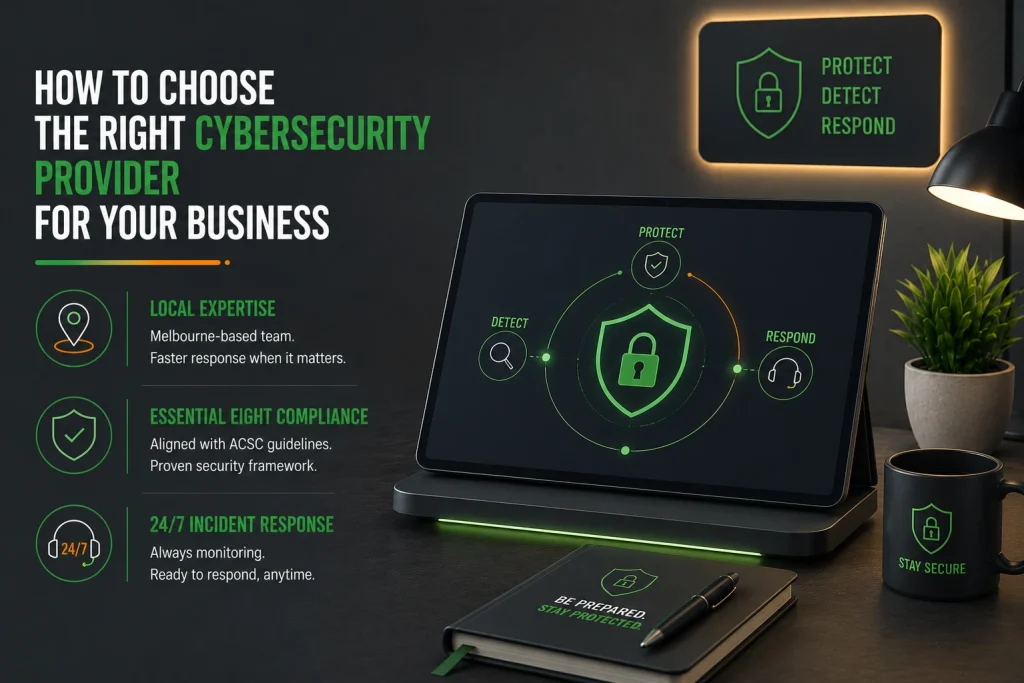
First, look for providers with local expertise. A Melbourne-based team understands the specific cyber threats facing Australian businesses and can respond faster when cyber incidents occur. Ask about their experience with businesses in your industry and their ability to deliver measurable outcomes.
Second, check what security framework they follow. Essential Eight compliance is the baseline recommended by the ACSC. Providers should explain how they implement each control and what Maturity Level suits your cybersecurity posture. A proactive approach to cyber risk management protects your digital assets.
Third, ask about their incident response capability. A provider that monitors but cannot respond leaves you exposed. Look for managed detection around the clock with clear response times in the service agreement. This ensures your security strategy includes protection, detection, and response.
Questions to ask a potential provider:
- Do you follow the Essential Eight framework?
- What is your average response time to a security incident?
- Do you offer 24/7 threat detection and monitoring?
- Have you worked with businesses in my industry before?
- What happens if we experience a data breach after hours?
Taking time to choose the right partner means better protection for your critical data and fewer surprises when you need help most. Cybersecurity experts with a local presence provide faster support than providers operating from other states or overseas.
Understanding Your Obligations Under the Notifiable Data Breaches Scheme
The Notifiable Data Breaches scheme requires businesses covered by the Privacy Act to notify affected individuals and the OAIC when a data breach is likely to cause serious harm. This is a key regulatory obligation for Melbourne businesses handling sensitive data.
In 2024, the OAIC received 1,113 data breach notifications, a 25 per cent increase from the previous year. Cybersecurity incidents accounted for the majority of breaches. For small businesses, compliance requirements may seem overwhelming, but professional cybersecurity services can help.
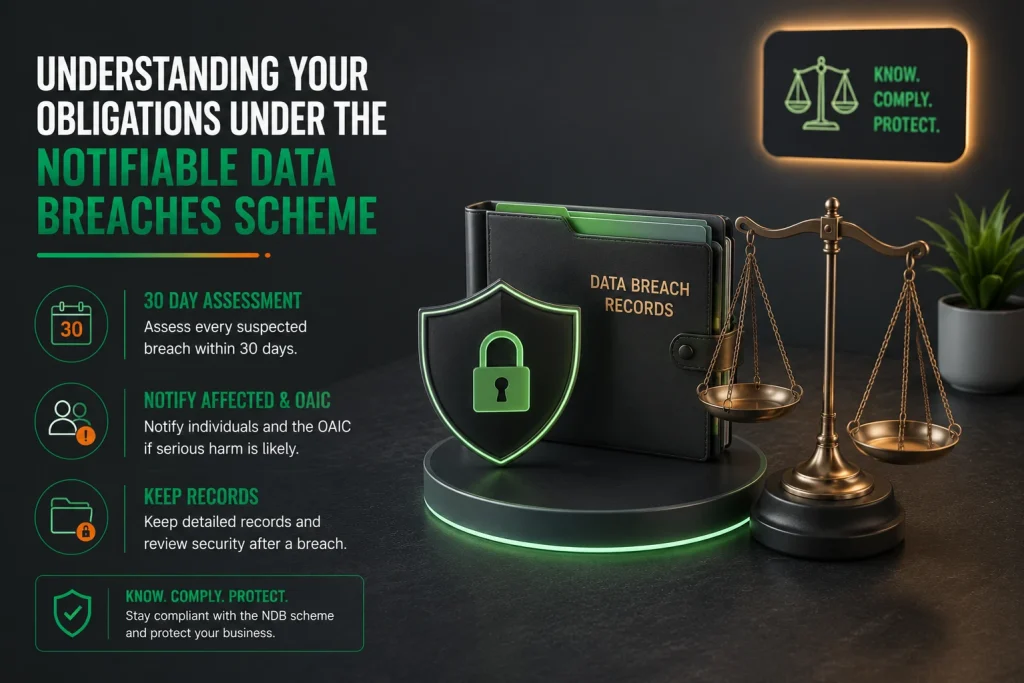
If your business holds customer data and suffers a breach, you have 30 days to assess whether the breach is likely to cause serious harm. If it is, you must notify affected individuals and the OAIC as soon as practicable. This assessment must consider the nature of the data and the risk of harm.
Key obligations under the NDB scheme:
- Assess every suspected data breach within 30 days
- Notify affected individuals if serious harm is likely
- Notify the OAIC with a detailed statement
- Keep records of all assessments and decisions
- Review and update your security measures after a breach
Failing to meet these regulatory requirements can result in significant penalties. Professional cybersecurity services can help you prepare a breach response plan, conduct vulnerability assessments, and ensure you meet your legal obligations. Digital forensics may be needed to understand how the breach occurred and prevent future attacks.
Why Cybersecurity Insurance Matters for Melbourne Businesses
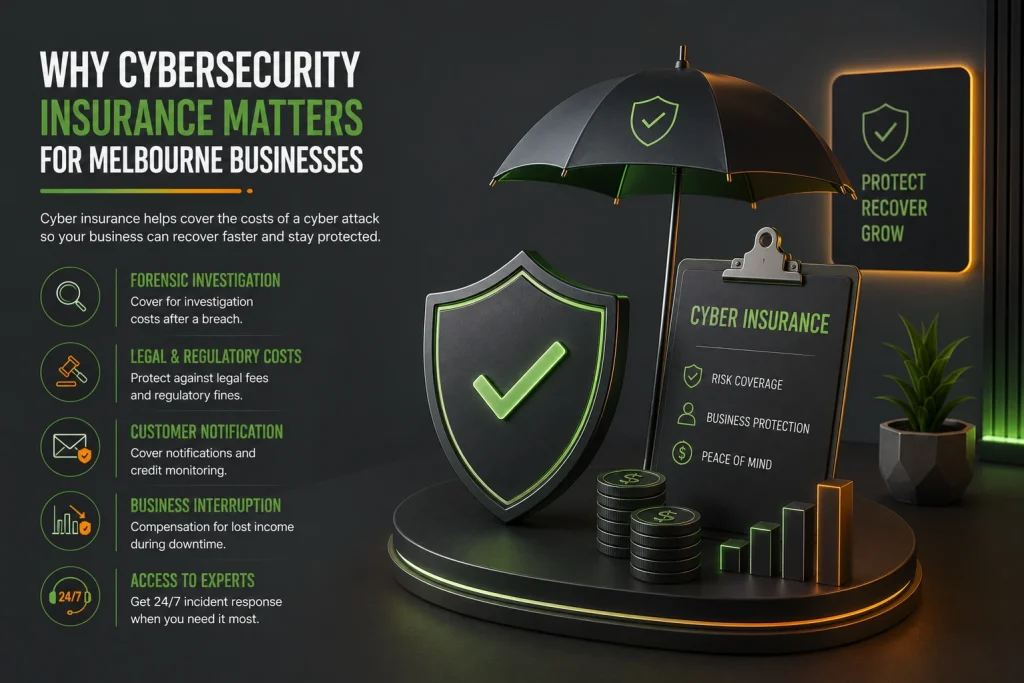
Cyber insurance helps cover the costs of a cyber attack, including forensic investigations, legal fees, customer notifications, and business interruption losses. Many policies also provide access to incident response teams when you need them most. This is a critical layer of cyber risk management.
The average cost of a ransomware incident in Australia has risen significantly in recent years, with some estimates showing costs have nearly doubled. For small businesses, the average cost per cybercrime report is around $40,000, according to ACSC estimates. These figures do not include long-term reputational damage or loss of customer trust.
However, insurers are tightening their requirements. Many policies now require businesses to implement specific controls like multi-factor authentication, regular backups, and endpoint protection before they provide cover. Some insurers also require Essential Eight compliance as a condition of coverage.
What cyber insurance typically covers:
- Forensic investigation costs after a breach
- Legal fees and regulatory fines
- Customer notification and credit monitoring
- Business interruption losses during downtime
- Access to incident response experts
Speak with a broker about your specific needs. Premiums start at about $700 a year for a sole trader and can exceed $50,000 for a medium business. The cost is small compared to the financial damage of a successful attack. Implementing a strong security posture through managed cybersecurity services can also lower your premiums.
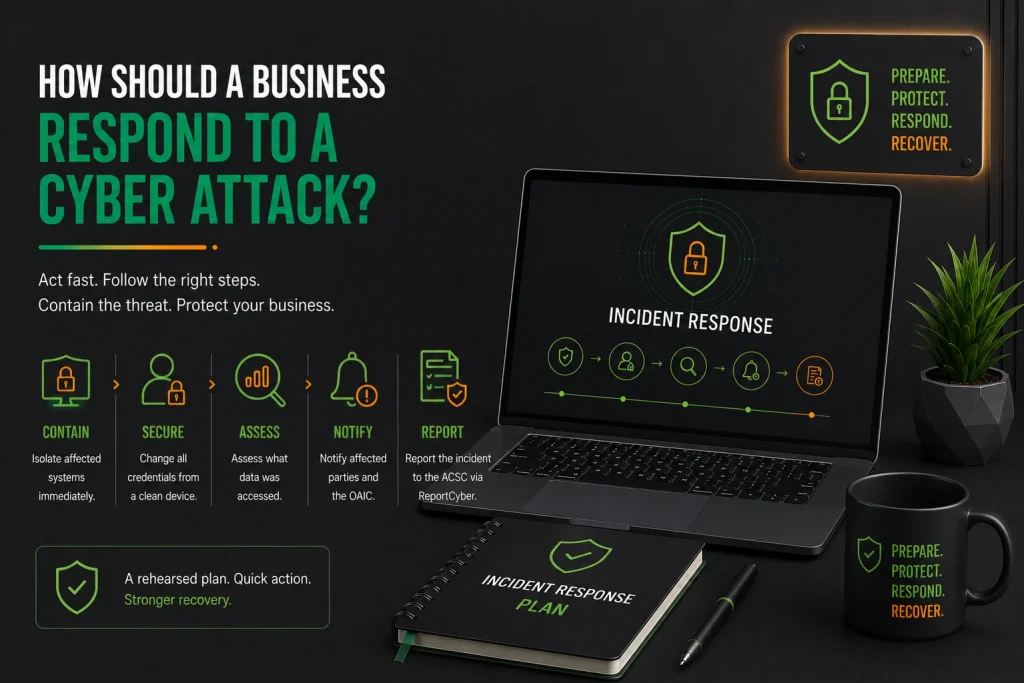
How Should a Business Respond to a Cyber Attack?
Isolate affected systems from the network immediately. Engage cybersecurity experts for incident response to contain the breach. Change all credentials from a clean device. Assess what data was accessed. Notify affected parties under the Notifiable Data Breaches scheme.
Report the incident to the ACSC through ReportCyber. A rehearsed incident response plan prevents panic-driven mistakes that make things worse. Disaster recovery from clean offline backups starts after the threat is fully removed. Digital forensics help understand how the attack happened so you can close that entry point.
Businesses already working with cybersecurity services Melbourne specialists usually recover faster because incident response plans and monitoring are already in place.
Frequently Asked Questions
How do I know if my business has already been compromised?
Silent signs include unexplained outbound network traffic at odd hours and new user accounts you did not create. Security software that has been disabled and cannot be re-enabled is another red flag. Emails contacts report getting from you that you did not send are a clear warning.
A professional security audit examines system logs, active connections, installed programs, and user accounts for indicators of compromise invisible during daily operations. Many businesses discover breaches months later only when an audit catches what routine monitoring missed. Regular security audits and managed detection are essential for strong protection.
Should a business ever pay a ransom?
The ACSC and AFP strongly advise against paying ransoms. Payment funds criminal activity and encourages further attacks. It does not guarantee you will get your data back. Sophos research found about 40 percent of victims who paid still lost some or all data. Offline backups make ransomware an inconvenience rather than a crisis.
What is the difference between vulnerability assessments and penetration testing?
A vulnerability assessment is automated software checking for weak spots like missing patches and default passwords. It runs in hours and produces a report. A penetration test is manual, where ethical hackers actively try to break in using real attacker methods. An assessment tells where doors might be unlocked. A test shows if someone can walk through.
What cybersecurity regulations apply to small businesses?
The Privacy Act 1988 applies to businesses above $3 million turnover and some smaller ones with sensitive data. The Notifiable Data Breaches scheme requires telling affected people and the OAIC about serious breaches. Compliance includes ISO 27001 and PCI-DSS for some sectors. Even if not required, the Essential Eight cuts cyber risk regardless of regulatory obligations.
Do personal phones used for work create security risks?
Yes, personal devices create risks harder to manage than company-owned equipment. They may lack security software and run outdated operating systems with known vulnerabilities. If lost or stolen without remote wipe, anyone can access work data. A BYOD policy should require security software, screen locks, encryption, and remote wipe through mobile device management.
Why Cybersecurity Services Melbourne Are No Longer Optional
Cyber threats against Australian businesses grow in volume and sophistication every year. Attacks that seemed advanced five years ago are now automated and scanning for victims continuously. Professional cybersecurity services Melbourne provide layered protection, threat detection, and training that stop most attacks before they succeed.
The monthly cost of protection is small compared to the financial and reputational cost of a successful breach. For businesses holding sensitive client data, the stakes include regulatory penalties and professional liability. Prevention costs far less than cure.
For businesses wanting to improve security across their operation, IT support solutions combine cybersecurity with everyday management. To protect your network, proper network setup adds another critical layer. All cybersecurity services are backed by the No Fix No Fee guarantee.
[Speak with a Melbourne cybersecurity specialist today. Call Nimble Nerds on 02 8091 0815 for an obligation-free security assessment of your business.]
References
- https://www.oaic.gov.au/privacy/notifiable-data-breaches
- https://www.invest.vic.gov.au/explore-your-sector/digital-technology/cybersecurity
- https://www.cyber.gov.au/about-us/view-all-content/reports-and-statistics/annual-cyber-threat-report-2024-2025
Related Articles